GoLeanSixSigma Champion Training 2026: The 2-Hour Course for Executives Who Sponsor Improvement | SkillQuesters
Most Lean Six Sigma courses are built for the people who run improvement projects. Champion Training is built for the people who decide which projects happen at all. If you…
Most Lean Six Sigma courses are built for the people who run improvement projects. Champion Training is built for the people who decide which projects happen at all. If you are an executive, director, or senior manager who sponsors improvement work — picking priorities, clearing roadblocks, and holding teams accountable for results — this roughly two-hour online course from GoLeanSixSigma (GLSS) was designed for your chair, not the analyst's desk. Here is what it covers, what it costs, and how it honestly fits the wider GLSS ladder.
The problem Champion Training solves
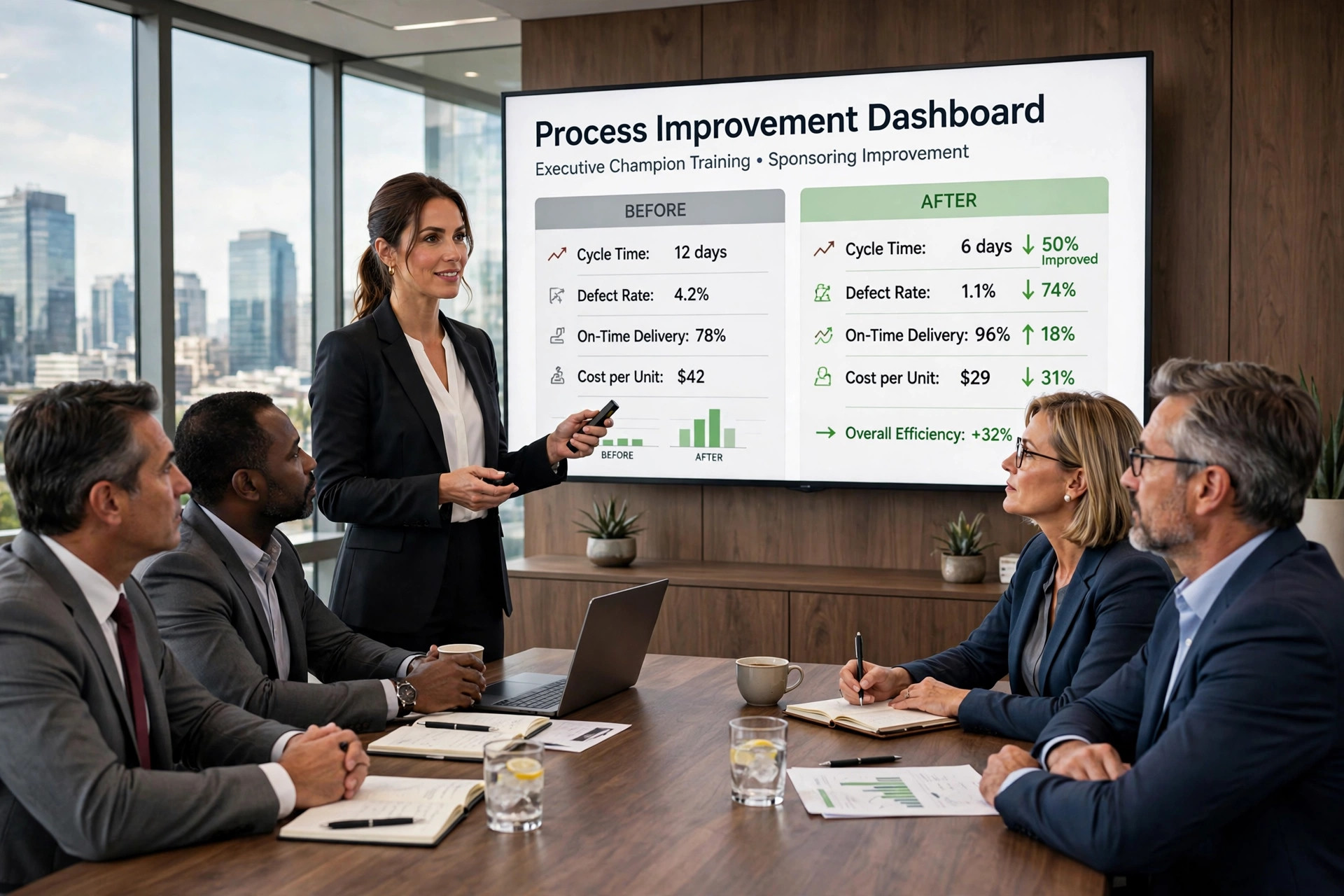
Improvement projects rarely fail because the team lacked a statistical tool. They fail because leadership chose the wrong project, starved it of time, or stopped paying attention after the kickoff. Lean Six Sigma has a name for the leader's role in preventing that: the Champion (sometimes called Sponsor). Champions select projects that actually move business goals, align them with strategy, support the Green Belts and Black Belts doing the work, and review progress so improvements stick.
The trouble: most senior leaders were never taught that role. They sign off on projects without a framework for choosing them, then wonder why “continuous improvement” produces slide decks instead of results. Champion Training is GLSS's short answer to that gap.
Look at the course directly here: view GoLeanSixSigma Champion Training
What the course is — the facts
Based on GoLeanSixSigma's published program information (checked October 2026):
- Price: $499, with the certification exam included
- Length: about 2 hours of online, self-paced training
- Audience: executives, sponsors, and senior leaders who select, support, and review improvement projects
- Format: online and self-paced — no cohort schedule, no travel
- Recertification: like other GLSS certifications, Champion operates under GLSS's policy of recertification every 2 years
Two hours is short, and that is the point. This is not meant to turn an executive into a practitioner. It teaches the leadership side: how improvement projects are chosen, how to support a team without micromanaging it, what to ask in progress reviews, and how Lean Six Sigma creates value when it is aimed at the right problems.
Where Champion sits in the GLSS ladder
Understanding the full ladder helps you see who in your organization needs what (prices from GLSS's published ladder, certification included at each level):
- White Belt — free, about 30 minutes. Basic literacy for everyone: what Lean Six Sigma is and how to spot waste.
- Yellow Belt — $99. For team members who support projects and run small improvements in their own area.
- Green Belt — $599. For project leaders who run full improvement projects part-time alongside their regular role.
- Black Belt — $999. For dedicated improvement experts who lead complex projects and mentor others.
- Champion — $499, about 2 hours. For the executives above them all, who choose and sponsor the work.
Notice the logic: Champion costs more than Yellow Belt despite being far shorter, because it is priced for senior leaders whose two hours are expensive and whose decisions multiply — or waste — everyone else's training investment. If your Green Belts are well trained but your projects are poorly chosen, Champion is the missing rung.
SkillQuesters contains affiliate links. If you purchase through them, we may earn a commission at no extra cost to you.
If you are reading this as a practitioner rather than an executive, our reviews of the GoLeanSixSigma Green Belt and the free GoLeanSixSigma White Belt will be more relevant to your own path.
Honest pros
- Respects executive time. Two focused hours, self-paced, instead of a two-day workshop that calendars will never allow.
- Targets the real bottleneck. Project selection and sponsorship are where improvement programs win or lose; few courses teach this side.
- Same system as your teams. GLSS Champions learn the same language and framework their Yellow, Green, and Black Belts train in, so reviews and conversations line up.
- Exam included, credential issued. You finish with a certification, not just attended-webinar status, under GLSS's standard two-year recertification cycle.
Cons and honest limits
- It will not make you a practitioner. Champion teaches you to choose and support projects, not to run analyses. Do not buy it expecting Green Belt skills.
- $499 for two hours is real money per hour. The value case rests entirely on better decisions afterward. A leader who sponsors nothing gains little.
- Online and self-paced means self-driven. There is no cohort of fellow executives pushing the conversation; the learning is on you.
- Recertification every 2 years adds an ongoing commitment if you want to keep the credential current — GLSS is transparent about this, but budget for it.
Who should take it — and who should not
Take Champion if you approve improvement projects, lead a department adopting Lean Six Sigma, or keep hearing DMAIC in meetings you chair without a clear picture of your role. It is also a sensible first move before funding team-wide belt training: leaders who understand the system choose better pilots.
Skip it if you personally run projects — you want Green Belt. Skip it if your organization has no improvement activity to sponsor; start your teams with the free White Belt instead and build from there: explore the GLSS ladder, starting free
Verdict
GoLeanSixSigma Champion Training is a narrow course aimed at exactly the right narrow audience: the leaders whose choices decide whether Lean Six Sigma pays off. At $499 for about two hours, it is premium per hour but cheap compared to one badly chosen project. If you sponsor improvement work, this is the fastest way to learn your part in it: start Champion Training on GoLeanSixSigma